Suṣumṇā
Receive what you need.Give what you have.
One breath begins the exchange.
Nothing to press
Open it and the light is already coming down. Out of the source above your head, down the midline, and it settles at your heart. You take one breath with it. On the out-breath the colour goes out past your body and into the room you are sitting in.
That is the whole of the front door. About twenty seconds. You do not prepare, you do not choose, and there is nothing to press.
Peace is one breath away. The app is built so that sentence is literally true — not a promise about what happens if you keep at it.
Where
After that first breath, the doorway opens. Seven words down the left of the column — I need more… — and you tap whichever is true today.
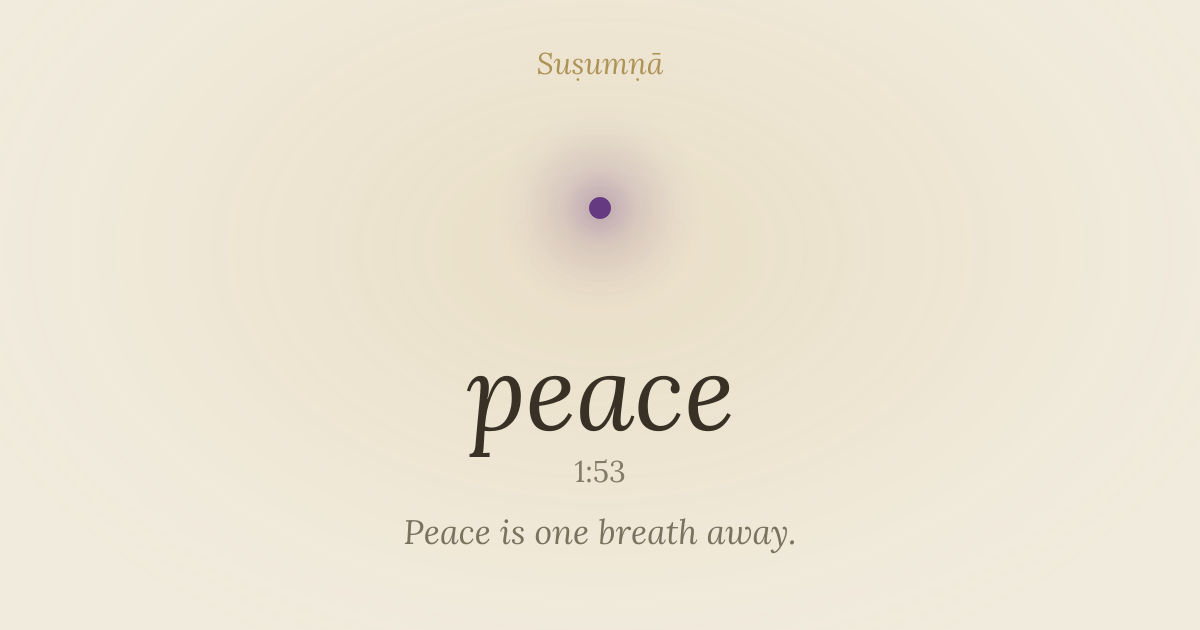
- peace
- sahasrāra · the crown
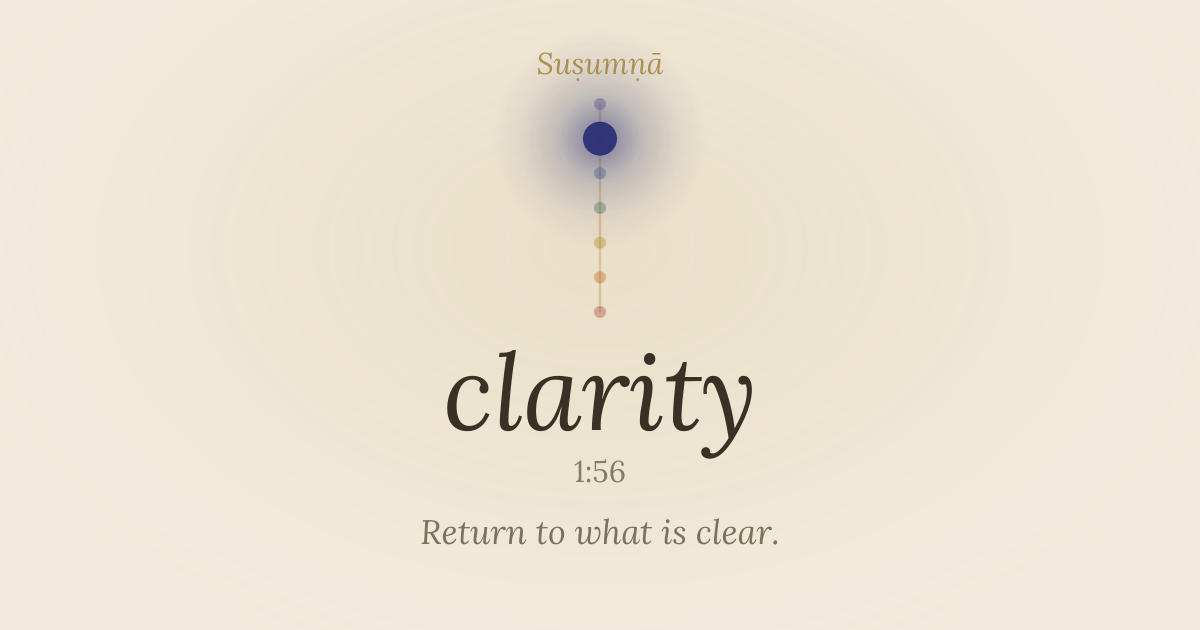
- clarity
- ājñā · the brow
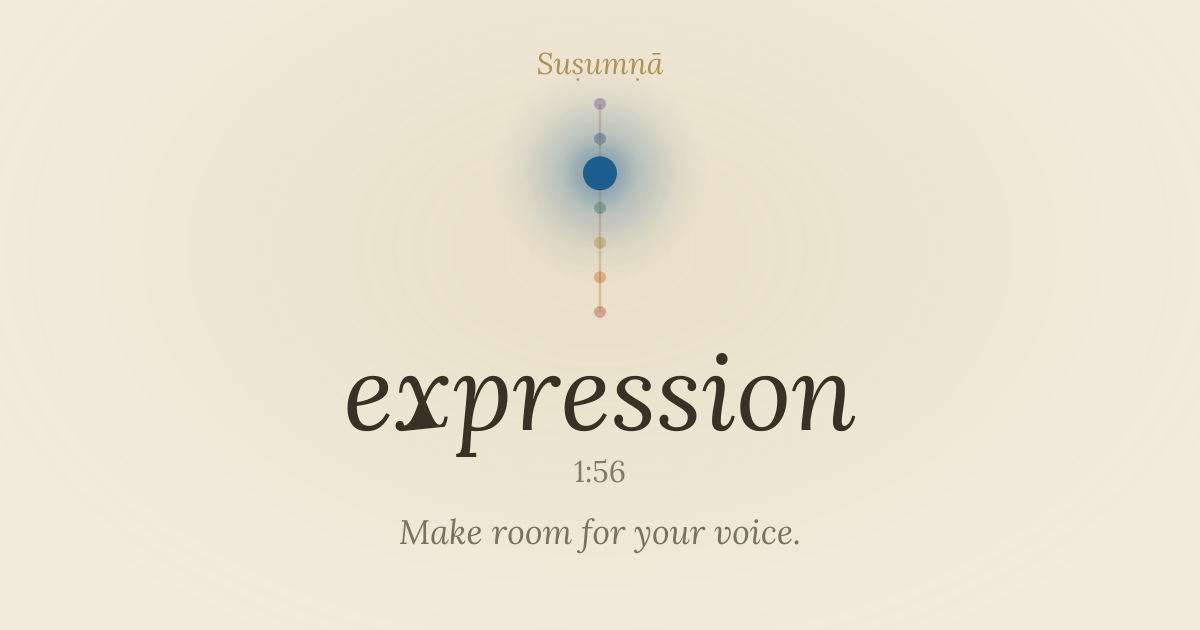
- expression
- viśuddha · the throat
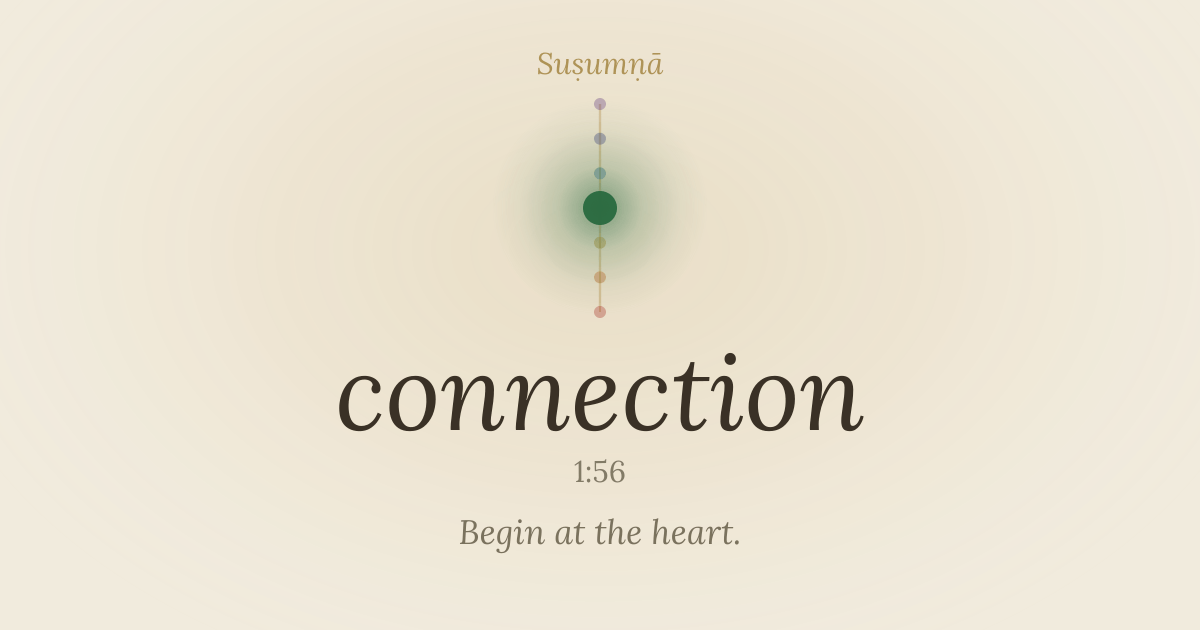
- connection
- anāhata · the heart
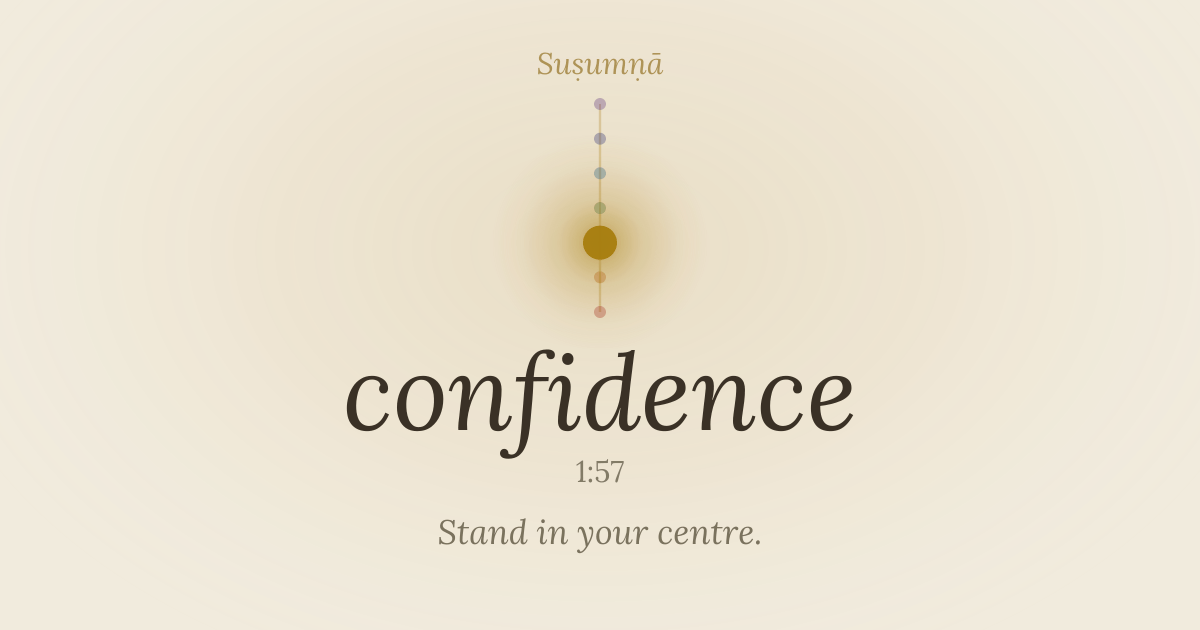
- confidence
- maṇipūra · the solar plexus
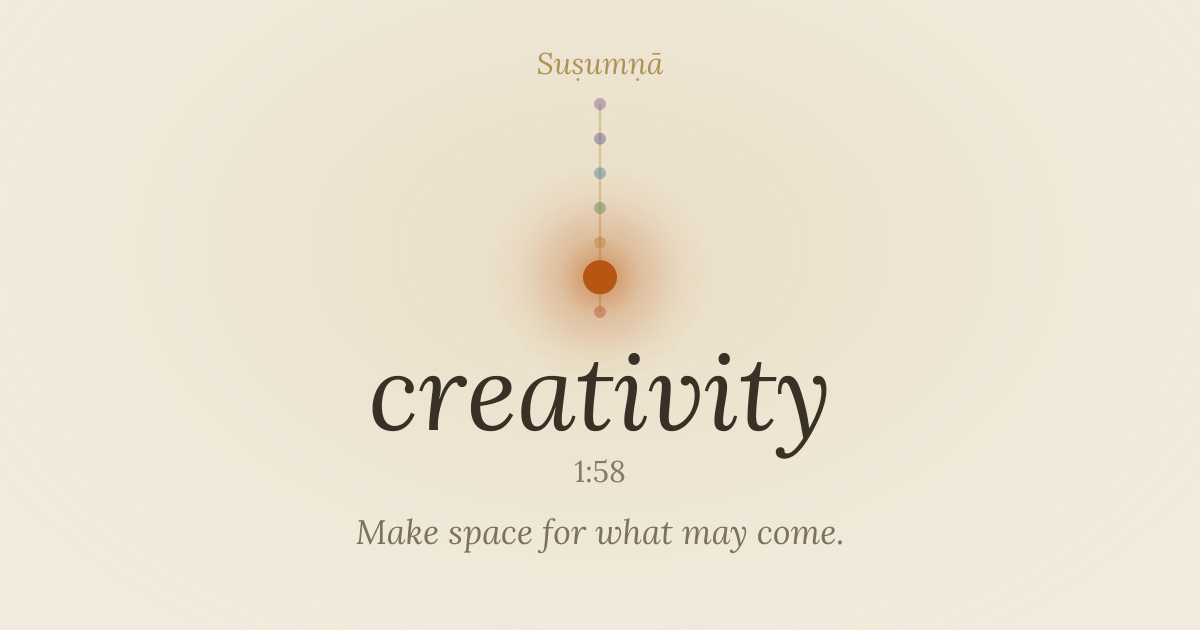
- creativity
- svādhiṣṭhāna · below the navel
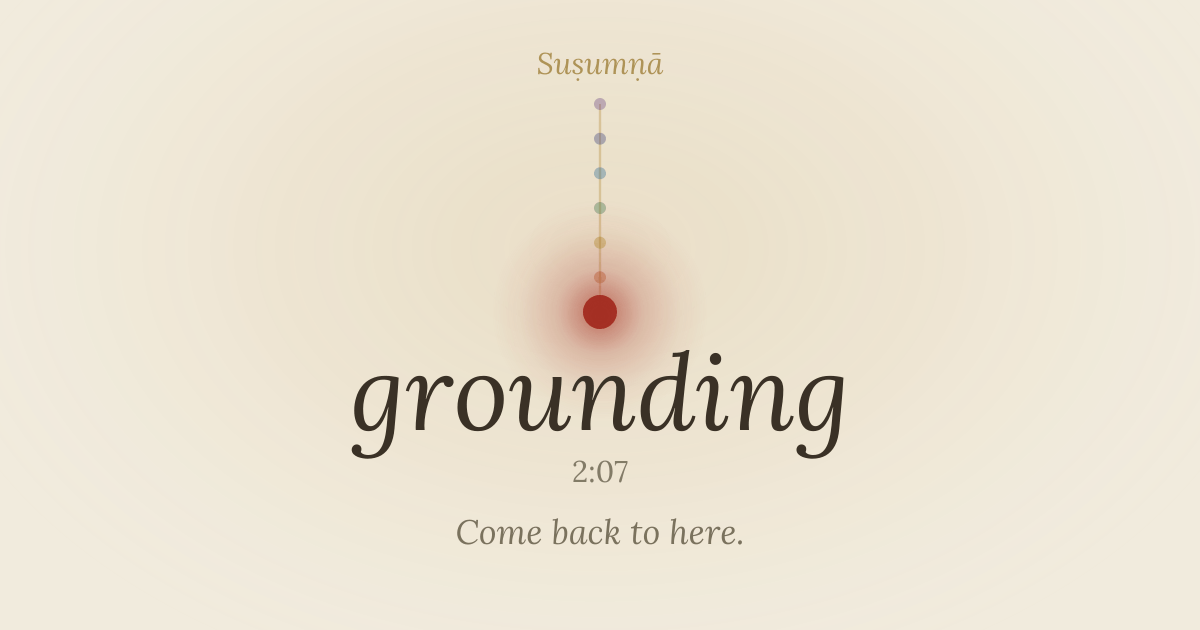
- grounding
- mūlādhāra · the root
They are ordinary English words on purpose. You do not have to believe anything about a chakra to know which part of your life is thin this week.
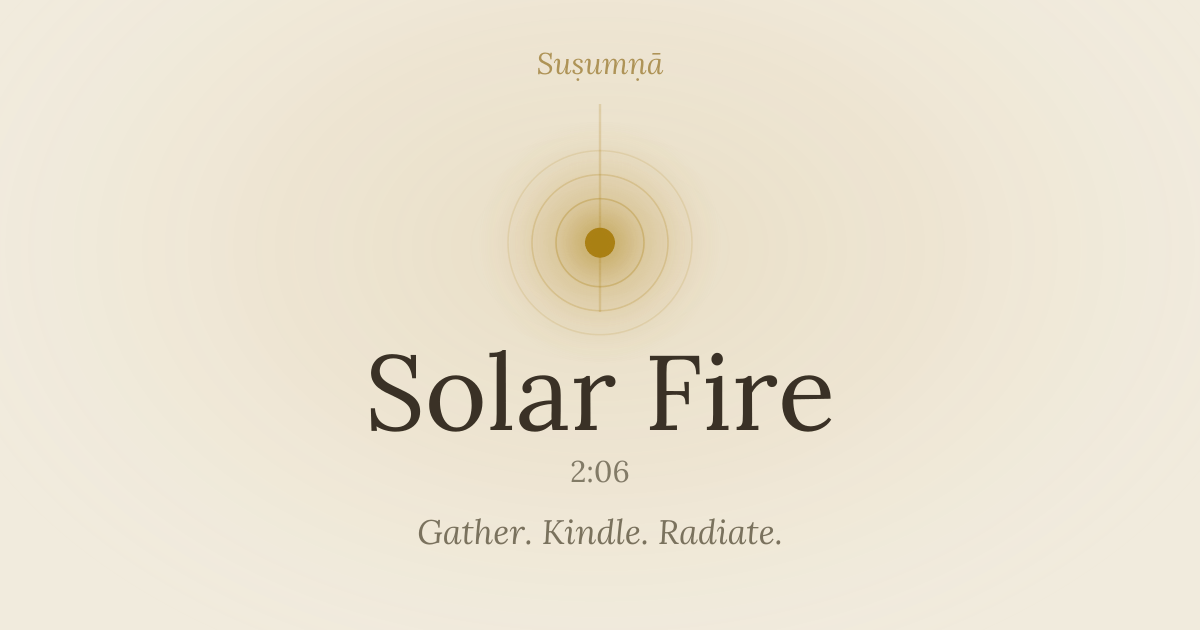
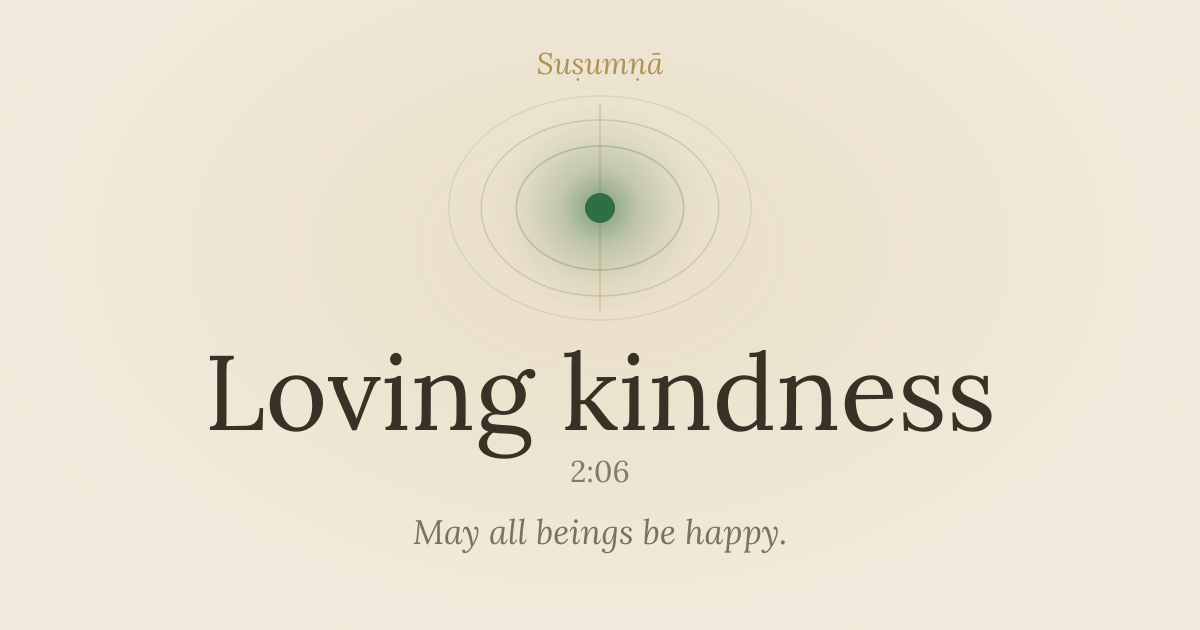
Four of them are more than a centre lighting up. Peace is a contraction: a circle closes around the crown over six breaths, taking the drawing with it, until there is a point and twenty-five seconds in which nothing happens. Grounding descends and keeps what it gathers, which is the one practice here that gives nothing to the room. Connection is mettā, widening by stages. Confidence gathers, kindles and radiates. The other three light their centre and let you breathe, because that is all they need.
Or how
If you would rather work the breath than the place, the right of the column says or choose a practice: and names seven. Each one says how long it takes, because time is the one thing the app cannot know for you.
- Solar Fire2:06
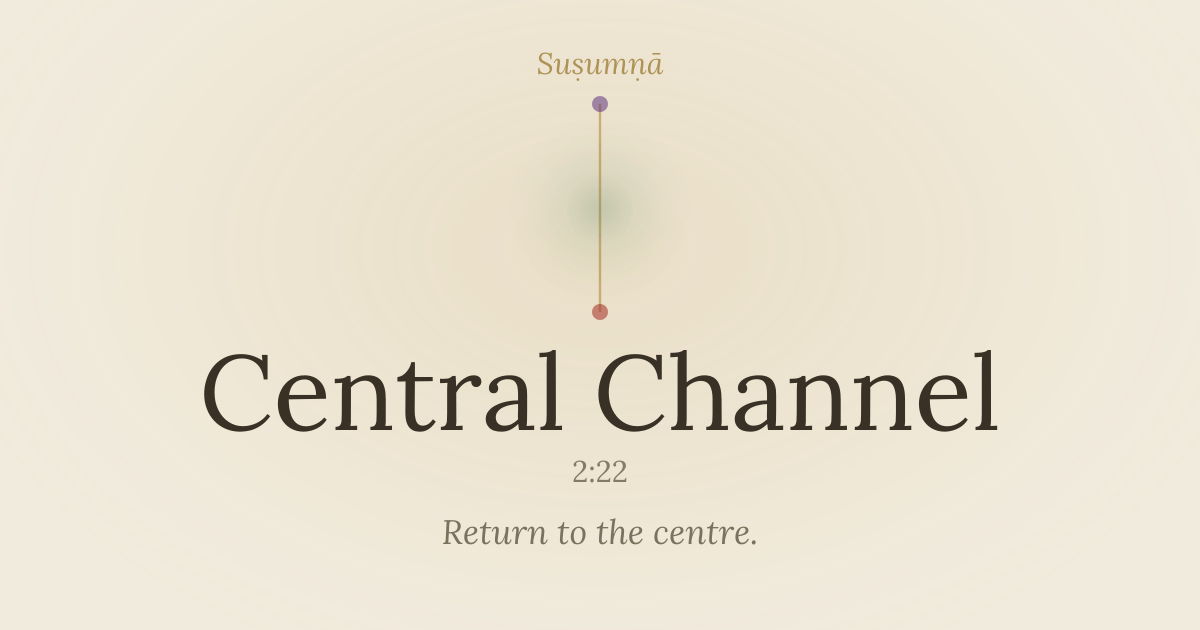
- Central Channel2:22
- Loving kindness2:06
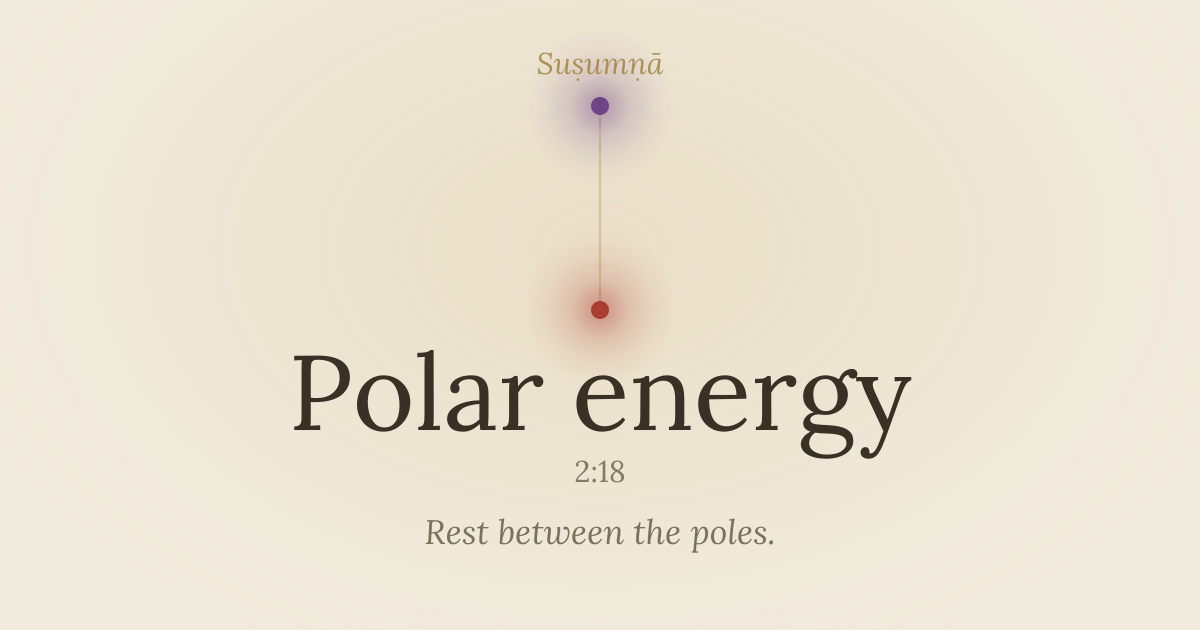
- Polar energy2:18
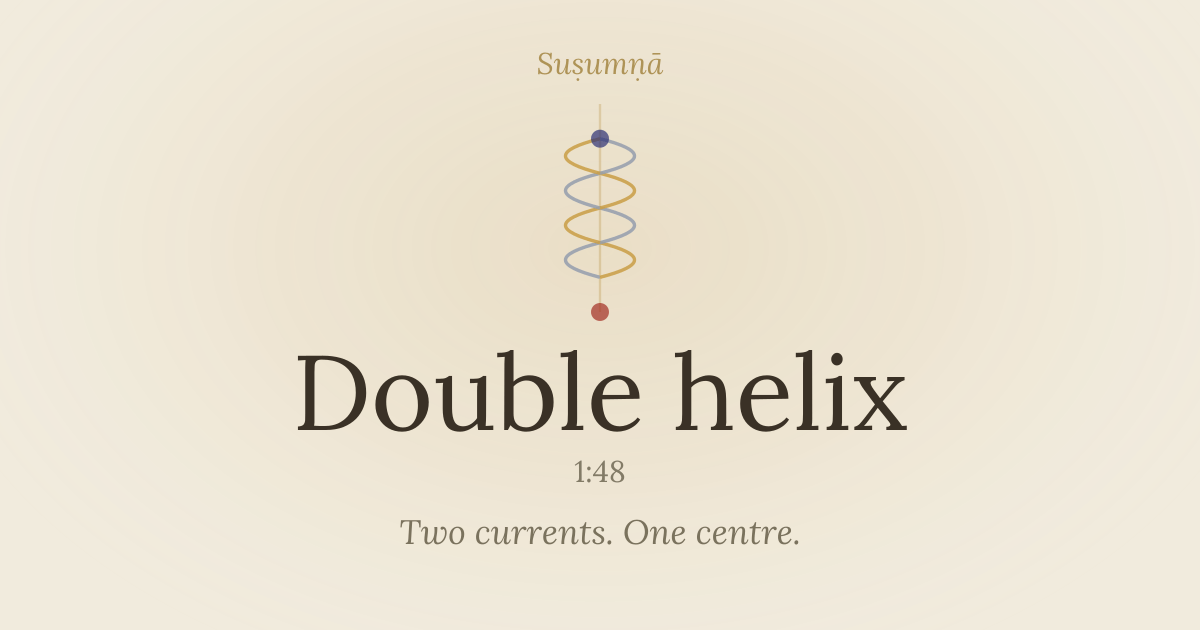
- Double helix1:48
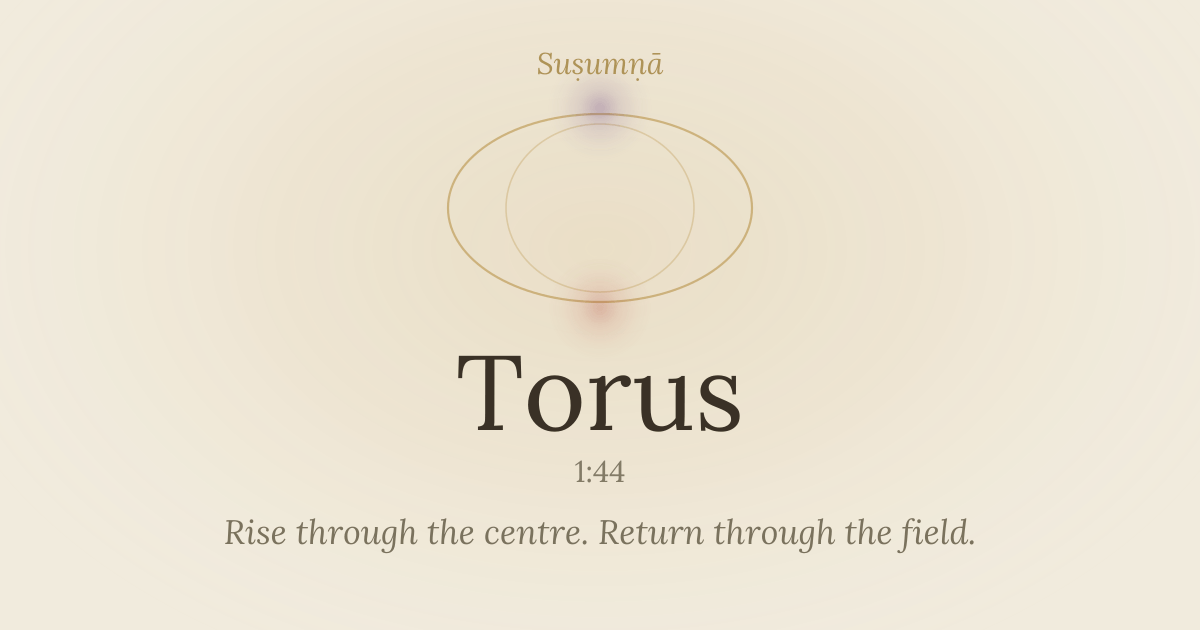
- Torus1:44
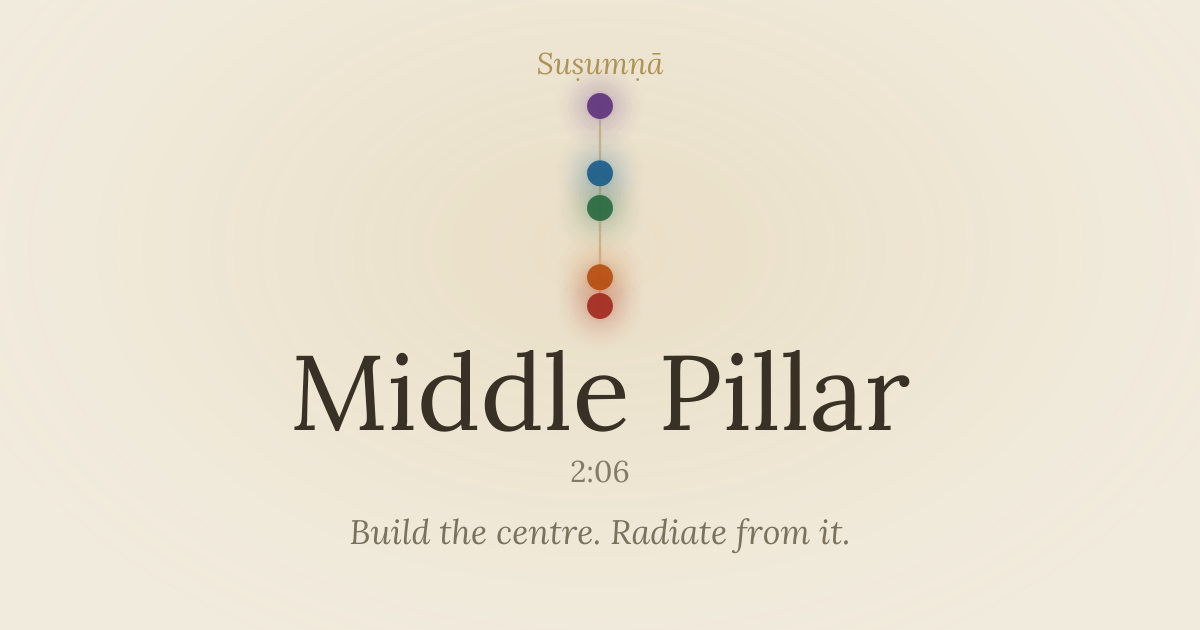
- Middle Pillar2:06
They are not one kind of thing, which is why the heading no longer pretends they are. The Torus is a geometry, loving kindness is a contemplation, the Middle Pillar comes out of a ritual. What they have in common is only that you chose the doing rather than the need.
You never count. The light does the counting and you follow it — down on the in-breath, out on the out-breath, and only as comfortably as your own breath allows.
Or too much
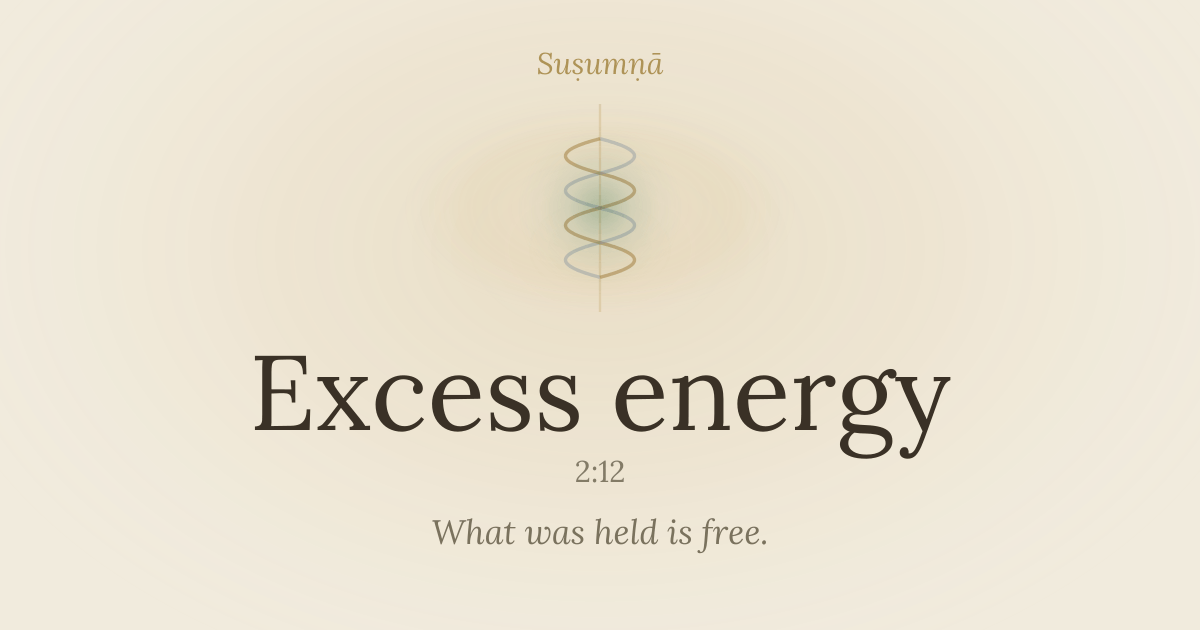
Below those, behind a rule of its own, is the sixteenth door. Excess energy — two minutes and twelve seconds — is the only one that opens by emptying.
Transmuting is not throwing away. What is too much in one place is given somewhere to go, so before it starts the door asks you to finish a sentence: transmute into… The same seven words finish it, and the one you choose is where the practice goes.
It begins with a release rather than an arrival, and the release is not counted: you are not told to breathe out for eight seconds before anything has happened, because being told how long to let go of something is the opposite of letting go of it. You breathe out for as long as you breathe out, and if the light is still letting go after your breath has finished, let it. Then there is a moment with nothing in it, fresh light comes down to the centre you chose, and the ordinary exchange runs there: receive, then give.
It asks nothing about where the excess came from. It cannot know, and the practice is better for not guessing.
And a room
Under that, behind a rule of its own, is the seventeenth door. Be here now is not a timed practice. It has no length, no count, no breath guidance, no bell and no ending — it lasts exactly as long as you sit, and you leave with the × or by touching the screen.
The body and its geometry fall away until a single point of light remains in the middle of the room. Nothing asks you to breathe with it. If you stay, the space around the point may become subtly different — a faint vesica, a little warmth, a deeper field — but nothing repeats, nothing pulses, and nothing becomes a new instruction. After a while even that stops changing. That is deliberate: a light that moves in time is an instruction whether or not it says so, and this door does not give instructions.
The point above the head is the dvādaśānta — the end of the twelve, twelve finger-breadths above the crown. It has been drawn on this screen from the first version, and the light in the practices comes from there. Resting attention there is an old practice in the non-dual Śaiva traditions of Kashmir: the Vijñāna Bhairava puts the movement between the heart and that point, and puts your attention not on the travelling but on the two places where movement begins.
This app does not teach that and is not a lineage. It has made you somewhere to sit. If the practice interests you, the text and a teacher are where it lives, not here.
The exchange
Inhale
Receive what you need.
The light comes down the column and gathers at the centre you chose. Nothing is asked of you except to let it arrive.
Exhale
Give what you have.
The centre's own colour spreads out past the body and fills the room. Nothing is lost by this. You are not being emptied — you are circulating, and what goes out is what came in.
The app never says what you have to give. It cannot know, and the moment it guessed it would be wrong for somebody. That noun is yours.
How to breathe
Breathe comfortably. The guide suggests a rhythm; it does not set you a target. If a breath feels too long, breathe the way you want to and rejoin whenever you like — the light will still be there.
Some practices breathe evenly. Others give the out-breath longer, because the practice means something by letting go, giving or radiating for longer. A longer breath is not a better breath, and it is not something to achieve. In Peace the guidance stops altogether; your breathing is your own.
You cannot fail a breath. Nothing here is scored. Finishing an exhale before the screen does is not a mistake; your body knows the length of your breath better than a preset does.
If it does not feel good
Never strain, force, over-breathe or hold your breath to keep up with this app. If you feel dizzy, lightheaded, short of breath, uncomfortable or anxious, stop following the guide and breathe normally. If that does not settle, stop the practice. You can leave at any moment with the × in the corner.
Suṣumṇā is a contemplative and breathwork app, not a medical or psychological tool. It does not diagnose or treat you, and it measures nothing — not your chakras, not your energy, not your nervous system.
The centres, the channels and the field are contemplative maps and visual language. They give attention somewhere to go; they are not presented as anatomy or as physiological measurement.
A different kind of practice
Most of a day asks you to produce, solve, decide, control. For a few minutes, do the opposite.
Receive.Give.Then go back to your life.
Seventeen doors
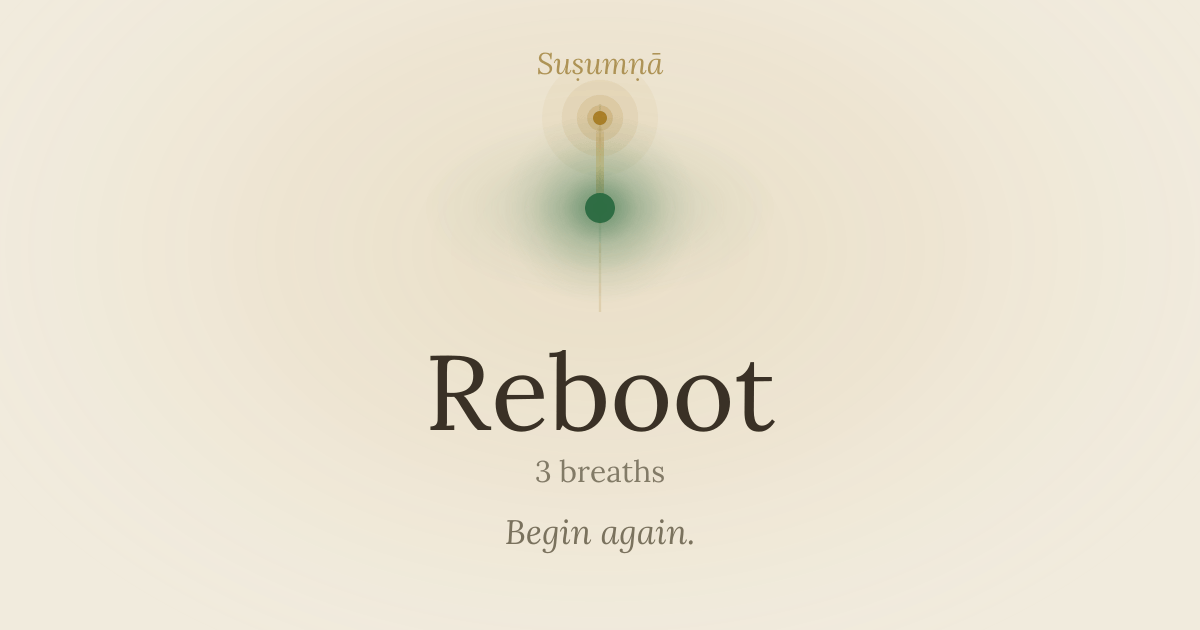
Every door has an address of its own, and a card that arrives with it. The Reboot has one too: the three-breath reset you choose from the doorway, which is not the single breath the app opens with. This is all of them. Tap one to open it — or hold it, copy the link, and send it to somebody. You do not need to have done it today.
I need a…
I need more…
or choose a practice…
I need to transmute…
or simply…
A link like that opens the app the way it always opens, with the first breath, and then lights the door it was sent for. It never starts a practice on its own; that is still a thing the person decides. And susumna.com on its own is the whole of it.
The wallpapers take the same visual language outside the app as quiet reminders. They are interpretations of the practices, not more practices.
Nothing to configure
No account, no sign-up, no notifications, no streak, no score, and nothing you have to set before it will work. Sound, the ground it is drawn on, and whether a practice repeats until you stop it — three controls, and every one of them is about the room rather than about you.
What the app remembers — your sound and ground, and which door you used last — stays on your phone. The site counts visits, and which practices are begun and finished, without cookies and without knowing who you are; the privacy page says exactly what. Add it to your home screen and it opens without a network at all.
Nothing to configure. Nothing to achieve. Just breathe.
Suṣumṇā was built with Claude. The practice, the choices, the features, and the endless removing of things are the author's.
Think New Thoughts Publishing · Privacy